

ADAS Calibration in Leander, TX
Static and dynamic camera recalibration for newer vehicles, done right the first time your windshield gets replaced.
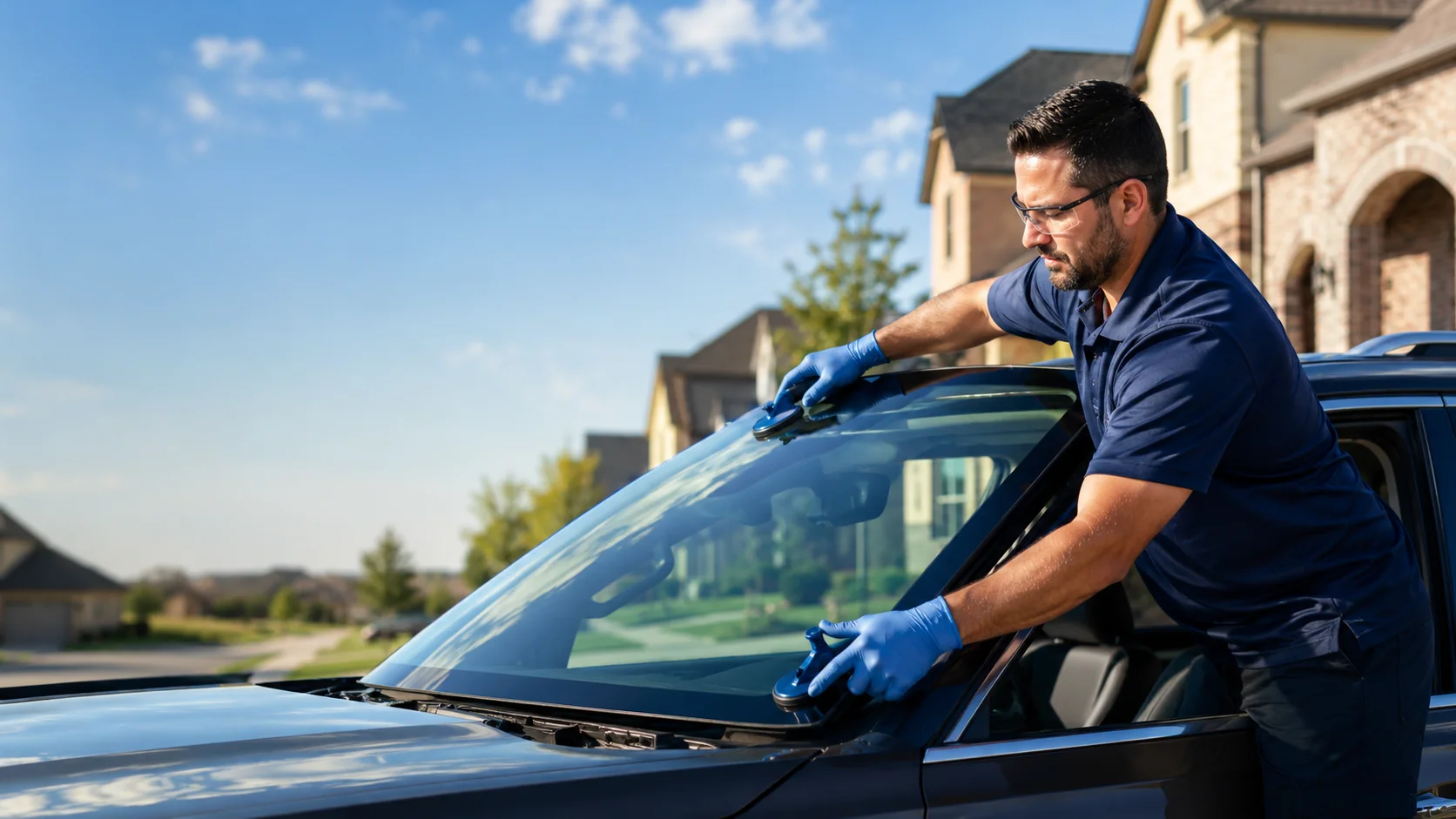
If your vehicle was built in 2018 or later, there’s a good chance it has a camera mounted behind the rearview mirror that powers lane-departure warning, automatic emergency braking, or adaptive cruise control. That camera is bolted to your windshield, and when the windshield comes out, the camera has to be recalibrated before those safety systems can be trusted again. Here’s what that actually involves, and why skipping it is a real risk, not just an upsell.
Why ADAS Recalibration Matters After a Windshield Replacement
A windshield isn’t just glass. On most modern vehicles, it’s also the mounting point for the camera your car’s computer relies on.
Reads the road
The camera tells your car’s computer where the lane lines are and how far away the car ahead is.
A fraction of a millimeter matters
Setting a new windshield shifts the camera’s position just enough to throw off what it reports.
Recalibration resets it
We reset the camera’s reference points so every system relying on it works the way it should.
Static vs. dynamic calibration
Two ways a camera gets recalibrated. Which one your vehicle needs depends on the manufacturer’s specification, not on what’s convenient for the shop.
Static Stationary
Done in a controlled space using printed calibration targets set at precise distances and heights. The vehicle stays parked while specialized equipment walks the camera through a fixed pattern of reference points.
Dynamic On the road
Done by driving the vehicle at a specific speed, usually on a road with clear, well-marked lane lines, while the camera relearns its surroundings in real time.
Some vehicles need only one. Others need both — a static calibration first, then a dynamic drive to confirm it. We check your vehicle’s specific requirement before we start, not after.
Which vehicles need it
As a rough guide, if your vehicle has any of the following, it almost certainly needs calibration after a windshield replacement:
- Lane-departure warning or lane-keep assist
- Forward-collision warning or automatic emergency braking
- Adaptive cruise control
- A rain-sensing wiper or auto-dimming mirror with a camera housing nearby
This covers most vehicles built from 2018 onward, and many built earlier. If you’re not sure whether yours qualifies, tell us the year, make, and model when you call, and we’ll check.
What happens if calibration is skipped or done wrong
This is the part that worries people most, and for good reason. A skipped or botched calibration doesn’t always trigger an obvious warning light. Sometimes the system just quietly reports the wrong distance to the car ahead, or the lane-keep assist responds later than it should.
We verify calibration before your vehicle leaves — not just visually, but with the same diagnostic scan tools that confirm the system is reading correctly.
Our ADAS calibration process
- 1
Check requirements
We confirm your vehicle’s specific calibration requirement based on the manufacturer’s specification before any work starts.
- 2
Replace the glass
We replace the windshield using the adhesive and cure time your calibration procedure actually requires.
- 3
Calibrate
We perform the calibration using the correct target setup or road conditions for your vehicle.
- 4
Verify
We run a diagnostic scan to confirm the system reads correctly before we call the job done.
ADAS calibration isn’t optional — it’s part of the job
If you’re due for a windshield replacement in Leander and your vehicle has any of these safety systems, we include calibration in every replacement that needs it, and we’ll tell you upfront whether yours does.